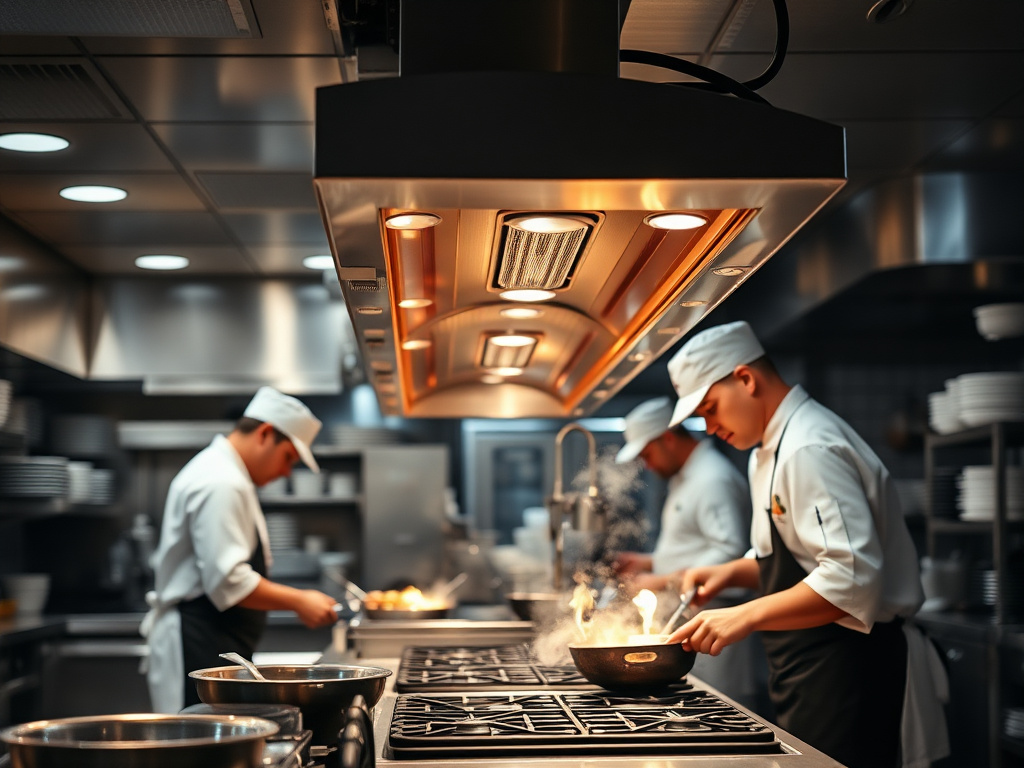
Restaurant Hood Cleaning in Phoenix & Across Arizona — Bare Metal, Every Time
A compliant restaurant hood cleaning is not a wipe of the visible canopy. NFPA 96 requires the entire exhaust system — hood, baffle filters, plenum, horizontal and vertical ductwork, and the rooftop fan — cleaned to bare metal wherever grease has accumulated. That is exactly what we deliver on every visit across the Phoenix metro and statewide, and we hand you the documentation to prove it.
What's Included
- Hood canopy interior and exterior, degreased and polished
- Baffle filters cleaned or exchanged for a clean set
- Plenum and grease trough scraped and washed to bare metal
- All reachable horizontal and vertical ductwork
- Rooftop exhaust fan hinged open, degreased, and inspected
- Timestamped before/after photos and NFPA 96 certificate
What a Real NFPA 96 Hood Cleaning Covers
The exhaust system is one continuous path from your cook line to the roof, and grease collects along its entire length. A cleaning that stops at the hood leaves fuel packed in the plenum and duct — the places a fire actually travels. We treat the system as the single unit NFPA 96 defines: hood, filters, plenum, ductwork, and fan, from the capture edge to the fan discharge.
For most Arizona restaurants that means a top-down process: open and degrease the fan on the roof first, work down through the duct and plenum with hot-water pressure washing, then finish at the hood and filters. Wastewater is captured and disposed of properly — not sent down your floor drains.
The Bare-Metal Standard — What “Clean” Legally Means
“Bare metal” is the phrase that defines professional standard of care in this trade. It means grease is removed down to the underlying steel on every reachable surface — not thinned, not smeared, not hidden behind a coat of degreaser. When a fire marshal shines a light past your filters into the plenum, bare metal is what should reflect back.
Where the ductwork genuinely can't be reached — a long welded run with no access panel — NFPA 96 requires us to document it in writing rather than pretend it was cleaned. That honest report is part of what protects you.
How Often Your Restaurant Needs It
Your frequency is set by cooking volume under NFPA 96 Table 11.4: solid-fuel cooking (mesquite, wood-fired) is monthly; high-volume operations with charbroilers, woks, or 12–24 hour service are quarterly; moderate-volume kitchens are semi-annual; and low-volume operations are annual. Kitchens running more than 16 hours a day moved into the monthly tier under the 2025 update. If you're not sure where you land, we'll classify your kitchen honestly rather than sell you visits you don't need.
The “Wipe-and-Tag” Problem — How to Spot a Fake Cleaning
The most common scam in this industry is the cheap crew that polishes the visible canopy, slaps a sticker on it, and leaves in 45 minutes without ever going on the roof. The hood looks great; the duct is still packed with grease; and your certificate is worthless the moment an inspector looks past the filters.
Five-minute test: did they access the roof and open the fan? Are there service tags at the access panels, not just one sticker on the hood? Do you have timestamped before/after photos of the plenum and duct? If the answer is no, you paid for a wipe, not a cleaning.
Scheduling Around Your Service Hours
You don't close for us. Overnight is our default shift — we clean between your last ticket and first prep, protect the cook line with plastic sheeting and equipment covers, and have the kitchen dry and prep-ready before your morning crew arrives. Split-shift and weekend windows are routine for kitchens that never close on weekdays.
Pricing Factors for Arizona Restaurants
Most single-hood restaurants pay roughly $350–$700 per visit, with larger systems running $500–$1,500 or more. The drivers are hood count, linear feet of duct and how many stories it climbs, fan access, grease load, and how long it's been since an honest cleaning. Standing route service costs less per visit than one-off emergency calls. We quote after seeing the system or detailed photos — flat sight-unseen prices are a red flag.
Restaurant Hood Cleaning — Common Questions
Ready for Restaurant Hood Cleaning?
Get a same-day quote with overnight scheduling and full NFPA 96 documentation.