"How often should I clean my hood?" is the single most common question we get, and the honest answer is: it depends on how you cook — not on how you feel about spending the money. NFPA 96, the fire-code standard that governs commercial kitchen exhaust systems, sets your cleaning frequency by cooking volume in Table 11.4. Here's how to find your tier in about two minutes.
The Quick-Answer Table
| Cooking Type / Volume | Required Frequency |
|---|---|
| Solid fuel (wood, charcoal, mesquite) | Monthly |
| More than 16 hours/day of cooking (2025 update) | Monthly |
| High-volume: 12–24 hr/day, wok, charbroiler | Quarterly |
| Moderate-volume | Semi-Annually |
| Low-volume: seasonal, institutional, occasional | Annually |
If you already know your row, great. If not, the sections below explain each tier and which Arizona kitchens land there.
Solid Fuel: Why Mesquite Grills and Wood-Fired Ovens Mean Monthly
Any solid-fuel cooking — wood, charcoal, or mesquite — puts the entire exhaust system serving that appliance on a monthly cleaning cycle. This surprises a lot of Arizona steakhouses and wood-fired pizzerias, but the reason is straightforward: solid fuel produces creosote and heavy carbon residue that ignite far more easily than ordinary cooking grease. That signature mesquite flavor comes with a signature fire risk, and the code responds accordingly.
If you have even one solid-fuel appliance under a hood, that hood is on the monthly schedule.
The Charbroiler, Wok, and 24-Hour Tier: Quarterly
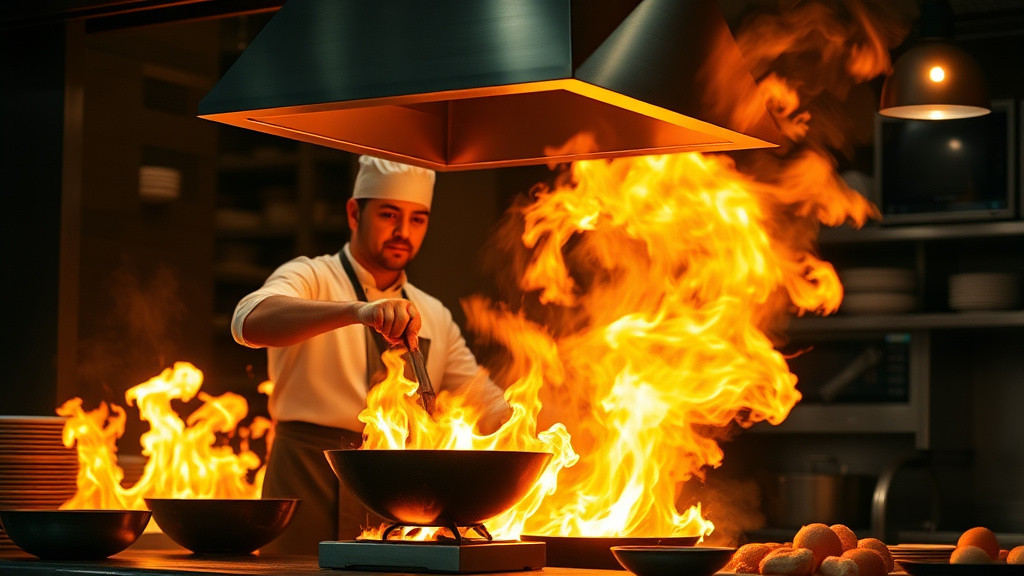
High-volume operations sit at quarterly — every three months. This tier captures the kitchens working their hoods hard: heavy charbroiler use, wok cooking that throws a lot of aerosolized oil, and any operation running 12 to 24 hours a day. Busy full-service restaurants, popular Asian kitchens, and sports bars with a flat-top going all night usually belong here.
The 2025 change you need to know: the updated edition of NFPA 96 pulls any operation cooking more than 16 hours a day into the monthly tier, even if the volume would otherwise be quarterly. Twenty-four-hour diners, truck stops, and busy ghost kitchens are the most affected — many were cleaning quarterly and are now technically due monthly.
Moderate-Volume: The Semi-Annual Middle
Most standard full-service restaurants — the lunch-and-dinner spot with a normal menu and normal hours — fall into the semi-annual tier, cleaned every six months. This is the middle of the bell curve: enough grease to require regular attention, not so much that you need it every quarter. Cafés, family restaurants, and diners with moderate hours typically live here.
Low-Volume: Annual for Churches, Seasonal, and Event Venues
At the light end, annual cleaning covers genuinely low-volume operations: church kitchens, seasonal snack bars, day camps, and event venues that fire up the line occasionally. Grease still accumulates — just slowly — and the annual visit doubles as an inspection that can catch a failed fan belt, a bird's nest in the duct, or rusted ductwork before your busy season arrives.
Important caveat: "we don't cook much" only qualifies you for annual if you're genuinely low-volume. An inspector applies the same table you do, and a busy kitchen calling itself low-volume is an easy correction notice.
What Changes Your Tier
Your frequency isn't fixed forever. These changes can bump you up:
- Adding a solid-fuel appliance — a new wood-fired oven moves that hood to monthly.
- Expanding your hours — crossing the 16-hour-a-day line triggers the monthly tier.
- Menu changes — adding heavy charbroiling or wok cooking increases grease output.
- Adding a smoker — solid-fuel smoke is heavy residue and a monthly-tier trigger.
If any of these happen, reassess your schedule rather than waiting for an inspector to do it for you.
Self-Assessment Worksheet
Answer these in order and stop at your first "yes":
- Do you cook over any solid fuel (wood, charcoal, mesquite)? → Monthly
- Do you cook more than 16 hours a day? → Monthly
- Do you run heavy charbroilers or woks, or cook 12–24 hours a day? → Quarterly
- Do you run a standard full-service kitchen at normal hours? → Semi-Annual
- Are you a genuinely light, seasonal, or occasional user? → Annual
That's your NFPA 96 baseline. If you're on the line between two tiers, err toward the more frequent one — it's cheaper than a failed inspection and much cheaper than a fire.
Not sure where your kitchen lands, or running a multi-brand ghost kitchen where the math gets tricky? We'll classify your system honestly and put you on the right schedule. Get a quote or explore our restaurant hood cleaning service to see exactly what a compliant cleaning includes.