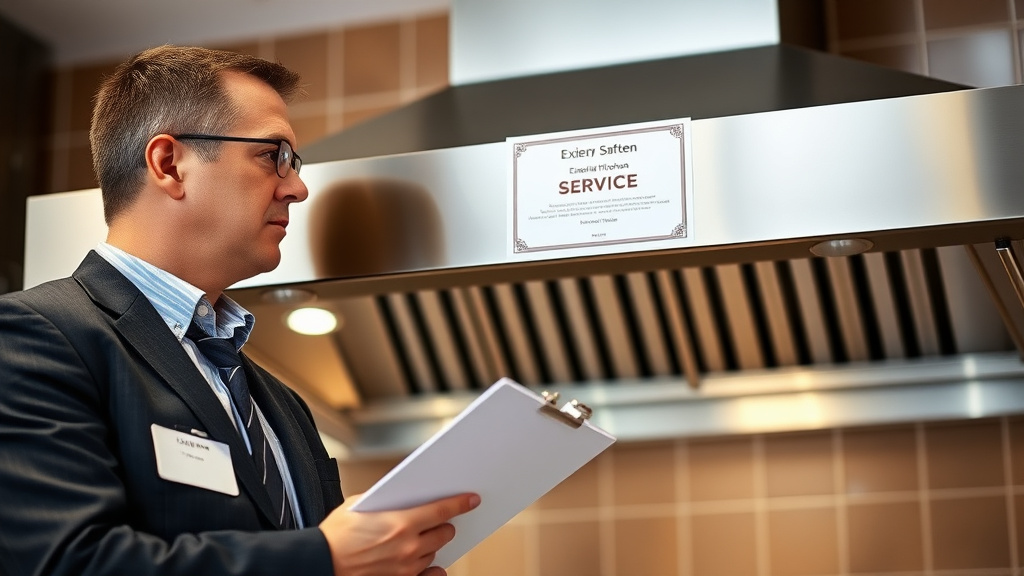
If you run a commercial kitchen anywhere in Arizona — a Scottsdale steakhouse, a Tucson taquería, a Tempe ghost kitchen, or a Flagstaff lodge — the grease building up in your exhaust system is both a fire hazard and a compliance obligation. This guide walks through everything you need to know about NFPA 96 hood cleaning in 2026: how often you have to clean, what "clean" legally means, what the fire marshal actually checks, what it costs across Arizona, and how to keep a routine inspection from turning into a shutdown.
It's long because the subject is. Use the sections below to jump to what you need — or read it straight through once and you'll understand your obligations better than most operators (and some inspectors).
Why This Guide Exists
Commercial kitchen fires are not rare. There are roughly 7,400 to 8,000 of them in the United States every year, and the single most preventable cause is grease. Failure to clean is a factor in about 22% of the fires that begin with cooking equipment. That's nearly one in four — and the fix is not exotic technology. It's removing grease from the exhaust system on a schedule.
Your local fire marshal knows those numbers, which is why kitchen exhaust cleaning is one of the most consistently enforced fire-code requirements in the food-service industry. A greasy hood isn't just a fire risk; it's a documented violation waiting to be written up. This guide exists to help you stay on the right side of that line — safely, and without overpaying.
What NFPA 96 Is — and How It Becomes Law in Arizona
NFPA 96 is the Standard for Ventilation Control and Fire Protection of Commercial Cooking Operations, published by the National Fire Protection Association. It's the governing document for everything about your kitchen exhaust system: how it's built, how it's maintained, and how often it's cleaned. The current edition is NFPA 96 (2025).
NFPA 96 is a standard, not a law by itself. It becomes enforceable when a jurisdiction adopts it — and virtually all of them do, usually by reference through the International Fire Code (IFC).
NFPA 96 vs. the International Fire Code
Arizona cities generally adopt the IFC, which in turn incorporates NFPA 96 for commercial cooking operations. The practical effect is the same: your kitchen exhaust system must be inspected and cleaned on the NFPA 96 schedule, cleaned to bare metal, and documented. When your fire inspector cites "the code," the requirements for your hood almost always trace back to NFPA 96.
Who Your AHJ Is
The AHJ — Authority Having Jurisdiction — is whoever enforces the fire code where your kitchen sits. In Arizona that's typically the local fire department's fire prevention division:
- Phoenix: Phoenix Fire Department, Fire Prevention
- Tucson: Tucson Fire Department
- Mesa, Scottsdale, Chandler, Gilbert, Glendale, Tempe: each city's fire prevention office
- Flagstaff and northern cities: local fire prevention divisions
- Unincorporated areas: county fire districts
Your AHJ has the final say on how the standard applies to your specific kitchen. When in doubt, they are the office to call.
Fire Code vs. Health Code: Two Inspectors, One Hood
Here's what catches a lot of owners off guard: your hood is inspected by two different authorities for two different reasons. The fire marshal cares about grease as fuel for a fire. The county health inspector — Maricopa County Environmental Services in the Phoenix metro, Pima County Health Department in Tucson — cares about grease as a sanitation and food-contamination problem. A dripping, greasy hood can cost you points on a health inspection and a correction notice from the fire marshal in the same week. One clean system satisfies both.
Your Cleaning Frequency Under Table 11.4
This is the question every owner asks first: how often do I have to clean? NFPA 96 answers it with Table 11.4, which sets frequency by cooking volume — not by your budget or your calendar. The 2025 edition added an important new tier.
Frequency by Cooking Type
| Cooking Type / Volume | Required Frequency | Typical Arizona Kitchens |
|---|---|---|
| Solid fuel (wood, charcoal, mesquite) | Monthly | Steakhouses, wood-fired pizzerias, BBQ |
| Operations cooking > 16 hours/day (2025 update) | Monthly | 24-hr diners, truck stops, busy ghost kitchens |
| High-volume (12–24 hr/day, wok, charbroiler) | Quarterly | Busy full-service, Asian kitchens, sports bars |
| Moderate-volume | Semi-Annually | Standard full-service restaurants, cafés |
| Low-volume (seasonal, institutional) | Annually | Churches, day camps, event venues |
How to Self-Classify Your Kitchen
To find your row, ask three questions:
- Do you cook over solid fuel? Any wood, charcoal, or mesquite — even on one appliance — puts the whole system serving it on a monthly schedule. Solid-fuel residue and creosote ignite far more easily than ordinary grease.
- How many hours a day do you cook? If it's more than 16, the 2025 update puts you in the monthly tier regardless of what you're cooking. This is the change most owners haven't heard about.
- How hard do your appliances work the hood? High-output charbroilers and woks producing heavy grease-laden vapor push you to quarterly even at moderate hours.
If none of those apply and you run a standard lunch-and-dinner service, you're likely semi-annual. Genuinely light users — a church hall, a seasonal snack bar — land at annual.
Mixed Properties: When One Building Carries Three Schedules
Large properties rarely have one answer. A resort might run a banquet charbroiler (quarterly), an outlet café (semi-annual), and a rarely-used prep hood (annual) under one roof. That's not a loophole — it's exactly how Table 11.4 is meant to work. The right approach is a per-hood cleaning matrix so each system is serviced on its own correct tier. Over-cleaning the low-volume hoods wastes money; under-cleaning the busy ones fails inspection.
What "Clean" Legally Means: The Bare-Metal Standard
Frequency is only half the requirement. The other half is how well the system is cleaned — and NFPA 96 sets a clear bar: bare metal.
Hood, Filters, Plenum, Duct, Fan — The Five Zones
"Cleaning the hood" is shorthand for cleaning the entire exhaust system, which has five zones:
- The hood (canopy) — the visible stainless part over your cook line
- The baffle filters — the removable grease filters
- The plenum — the chamber behind the filters where grease collects
- The ductwork — horizontal and vertical runs carrying vapor to the roof
- The exhaust fan — the upblast fan on the roof that pulls it all through
Grease collects in every zone, and NFPA 96 requires each one cleaned to bare metal wherever it accumulates. A cleaning that stops at the hood and filters leaves fuel packed in the plenum and duct — the exact places a fire travels.
The Wipe-and-Tag Scam and How to Catch It in 5 Minutes
The most common fraud in this trade is the crew that wipes the visible canopy, sticks a certification label on it, and leaves in 45 minutes without ever touching the roof. The hood looks great. The duct is still full of grease. And your certificate is worthless the moment an inspector shines a light past the filters.
Five-minute test after any cleaning:
- Did they access the roof and open the fan? If not, the duct wasn't cleaned.
- Are there service tags at the access panels — not just one sticker on the hood?
- Do you have timestamped before/after photos of the plenum and duct interior?
- Did the job take a realistic amount of time? A single-hood system is 2–4 hours, not 45 minutes.
If the answer to those is no, you paid for a wipe, not a cleaning — and you're not compliant.
The Documentation Package (2025 Edition)
A real cleaning ends with paperwork. The 2025 edition of NFPA 96 expanded what's required, and photos are now part of it.
Kitchen Label & Access-Panel Service Tags
You should get a dated label posted in the kitchen showing the company name and service date, plus a service tag at each access panel proving the whole system was reached. Inspectors check the date first — an expired tag is an easy citation.
Written Report of Inaccessible Areas
No system is 100% reachable. Long welded duct runs, missing access panels, and landlord-controlled chases can block full cleaning. NFPA 96 requires the cleaning company to give you a written report listing any area that couldn't be cleaned. This protects you: it documents exactly where risk remains and shows you (and the AHJ) that the company looked honestly. A company that never reports an inaccessible area on an older building isn't inspecting carefully.
On-Premises Certificate + Timestamped Photos
You should keep an NFPA 96 cleaning certificate on the premises, and — new emphasis in the 2025 edition — timestamped before/after photos documenting the plenum, duct, and fan. Paper stickers alone no longer satisfy the standard. Photos are the fastest way to prove a real cleaning and the item cut-rate crews skip.
3-Year Record Retention — Whose Job Is It?
Service records must be retained for three years. A reputable cleaning company keeps copies and can re-issue your certificate the same day if you lose it. Keep your own copies too — the on-premises certificate is what an inspector wants to see on the spot.
What Hood Cleaning Costs in Arizona (2026)
Now the other question every owner asks: what's this going to cost? Prices vary with your system, but here are realistic Arizona ranges.
Per-Visit Price by System Size
| System Size | Typical Per-Visit Range |
|---|---|
| Single hood, maintained | $350 – $700 |
| 2–3 hoods | $500 – $1,200 |
| Large multi-hood restaurant | $1,000 – $2,500 |
| Institutional / campus kitchen | Custom (multi-hood contract) |
Annual Compliance Budget by Frequency Tier
Multiply your per-visit cost by your frequency to budget for the year:
| Frequency Tier | Visits/Year | Example Annual (single hood) |
|---|---|---|
| Monthly | 12 | $4,200 – $8,400 |
| Quarterly | 4 | $1,400 – $2,800 |
| Semi-annual | 2 | $700 – $1,400 |
| Annual | 1 | $350 – $700 |
The Five Pricing Drivers
Your actual price comes down to five things:
- Number of hoods and fans — more equipment, more labor.
- Total duct length and vertical runs — a two-story duct is far more work than a short horizontal one.
- Accessibility — access panels present or not, roof hatch vs. ladder work.
- Grease load — a neglected first cleaning takes hours longer than a maintained one.
- Scheduling — standing route service costs less per visit than one-off emergency calls.
Why the Cheapest Quote Is Usually the Most Expensive Certificate
A quote dramatically below the ranges above almost always pays for a canopy wipe and a sticker. You save a few hundred dollars now and inherit a duct full of grease, a worthless certificate, and a correction notice at your next inspection — plus the cost of the real cleaning you still have to buy. In this trade, the low bid is frequently the expensive choice.
The Inspection Process, City by City
Enforcement details vary across Arizona, but the shape is consistent.
Phoenix-Metro Inspections
Expect the Phoenix Fire Department (or your city's fire prevention division) to check your hood label date, ask for your certificate and reports, examine filter condition, and look past the filters into the plenum for grease. Maricopa County Environmental Services handles the health side, citing visible grease and drip contamination. Paired documentation — fire and health — is genuinely useful here.
Tucson & Pima County
Tucson Fire covers fire prevention; the Pima County Health Department handles sanitation. The requirements mirror the metro: current tag, certificate on premises, filters intact, plenum clean.
Smaller Jurisdictions & Fire Districts
Flagstaff, Yuma, Prescott, Lake Havasu, and unincorporated county fire districts enforce the same NFPA 96 baseline, though inspection frequency and staffing vary. In smaller markets a reliable, documented cleaning history goes a long way with an inspector who knows the local operators.
Failed Inspection: Correction Notices, Re-Inspection, and Worst-Case Shutdown
If your system fails, you'll typically get a correction notice with a deadline to clean and re-certify. Meet it and you're fine. Ignore it and you risk re-inspection fees, escalating penalties, and — in serious cases — an order to stop cooking until the system is compliant. A failed inspection is recoverable, but only if you move fast, which is exactly what emergency cleaning service is for.
Choosing a Hood Cleaning Company in Arizona
Not all cleaning companies are equal. Two things separate the real ones.
IKECA Certifications to Ask For
The recognized industry credentials come from IKECA — the International Kitchen Exhaust Cleaning Association:
- CECT — Certified Exhaust Cleaning Technician
- CECS — Certified Exhaust Cleaning Specialist
- CESI — Certified Exhaust System Inspector
NFPA 96 requires cleaning by trained, qualified, and certified persons acceptable to the AHJ. A certified technician is what "qualified" looks like in practice. Ask before anyone touches your system.
10 Questions to Ask Before You Sign
- Are your technicians IKECA-certified?
- Do you clean to bare metal on the whole system, including the duct and fan?
- Will you access the roof and open the fan?
- Do you provide timestamped before/after photos?
- Do you give a written inaccessible-areas report?
- What documentation do we keep on premises?
- Do you retain records for three years and re-issue on request?
- Can you work overnight so we don't close?
- How do you determine our NFPA 96 frequency?
- Can you respond to a correction notice on a deadline?
The Arizona Operator's Compliance Checklist
Print this and keep it by the office phone:
- Cleaning frequency confirmed against Table 11.4 (including the >16 hr/day rule)
- Cleaning company's technicians are IKECA-certified
- Hood label current and dated
- Service tags present at each access panel
- Certificate on premises and easy to produce
- Timestamped before/after photos on file
- Inaccessible-areas report read and understood
- Service records retained at least 3 years
- Baffle filters intact, correct type (no mesh over grease appliances)
- Fire-suppression system serviced separately and current
If every box is checked, a routine inspection is a non-event.
Frequently Asked Questions
How often does a restaurant hood need to be cleaned in Arizona? It depends on cooking volume under NFPA 96 Table 11.4: solid fuel is monthly, high-volume is quarterly, moderate is semi-annual, low-volume is annual, and any operation cooking more than 16 hours a day is monthly under the 2025 update.
What does hood cleaning cost in Arizona? Most single-hood restaurants pay $350–$700 per visit; larger systems run $500–$2,500 depending on hood count, duct length, access, and grease load.
What documentation do I need for the fire marshal? A dated hood label, service tags at access panels, a written inaccessible-areas report, an on-premises certificate, and timestamped before/after photos — retained for three years.
Does my fire-suppression service count as hood cleaning? No. Suppression service and NFPA 96 cleaning are separate requirements. You need both.
What happens if I fail an inspection? You'll typically receive a correction notice with a deadline. Clean and re-certify before it expires and you avoid penalties; ignore it and you risk fines and a possible shutdown.
Staying compliant in Arizona isn't complicated once you know your frequency, insist on a bare-metal cleaning, and keep the documentation. If you'd like us to classify your kitchen, quote your system honestly, and handle the cleaning overnight so you never close, request a compliance quote or call us any time at 844-967-5247.