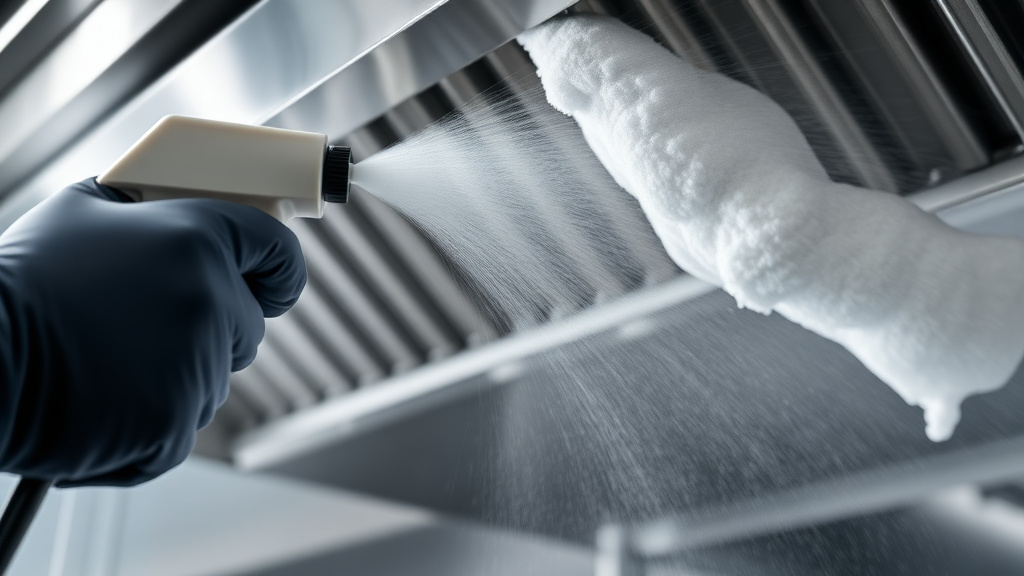
If you've never watched a commercial hood cleaning done right, it's easy to assume it's a quick wipe-down. It isn't. A proper NFPA 96 cleaning is a methodical, top-down process that runs a few hours and ends with real documentation. Here's exactly what happens on a typical overnight visit — and the red flags that tell you a crew is cutting corners.
Before We Arrive: What to Prep
A clean visit starts with a little coordination. Before the crew shows up, we confirm a few things with you:
- Access — how we get into the kitchen and onto the roof after hours.
- Alarms — any security or fire-panel notes so nothing trips overnight.
- Shutoffs — coordinating gas or pilot shutoff for safety during cleaning.
- Timing — we schedule after your last ticket so the line is cold and clear.
You don't need to do much beyond clearing the cook line of loose items. Everything else is our job.
Hour 1: Protection & Shutdown
The first phase is all about protecting your kitchen. The crew powers down the exhaust fans, covers and seals the cook line with plastic sheeting and equipment covers, protects your fire-suppression nozzles and pilot lights, and lays down floor protection to catch runoff. Wash water gets captured deliberately — not sent down your floor drains, where grease causes its own problems.
This step is unglamorous and essential. A crew that skips protection is the crew that leaves you a greasy, wet mess in the morning.
The Roof First: Fan Opened & Degreased
Here's the tell that separates a real cleaning from a fake one: we go to the roof first. The exhaust fan is hinged open, and the blades, housing, and shroud are degreased down to bare metal. The grease cup and drain lines are cleared. While we're up there, we check belts, bearings, and general fan condition — Arizona rooftop heat is brutal on this equipment, and catching a failing belt now beats an emergency later.
If a "hood cleaning" never involves the roof, the fan and most of the duct never got cleaned. Period.
Duct & Plenum: Degreaser + Hot-Water Pressure Wash to Bare Metal
Working down from the fan, the crew treats the ductwork and plenum with commercial degreaser and cleans them with hot-water pressure washing. This is the heart of the job — the plenum and duct are where grease accumulates most heavily and where a fire actually travels. Every reachable surface comes down to bare metal.
Where the duct genuinely can't be reached — a long welded run with no access panel — we note it in a written inaccessible-areas report rather than pretending it was cleaned. That honesty is part of the NFPA 96 standard and part of what protects you at inspection.
Filters: Clean or Exchange
Your baffle filters come out and are either cleaned in a heated caustic tank (the only way to truly strip them) or swapped for a clean set if you're on an exchange program. Any warped, gapped, or damaged filters get flagged — a filter that can't seal lets grease bypass straight into the plenum you just paid to clean.
Detail & Polish: Canopy, Backsplash, Floors
With the system clean, the crew details the visible components: the hood canopy inside and out, the stainless backsplash, and the surrounding surfaces. Then the protection comes up, the floors get cleaned, and the kitchen is restored — fans back on, filters re-hung, everything dry and prep-ready before your morning crew arrives.
The Walkthrough: Label, Tags, Photos, Certificate
The last phase is documentation, and you should treat it as seriously as the cleaning itself. Before you sign, confirm you're getting:
- A dated hood label with company name and service date
- Service tags at each access panel
- Timestamped before/after photos of the plenum, duct, and fan
- An NFPA 96 certificate for your on-premises records
- A written report of any inaccessible areas
This package is what your fire marshal and health inspector want to see. Photos are the 2025-edition requirement most cut-rate crews skip — insist on them.
Red Flags That a Crew Is Cutting Corners
Watch for these:
- They never went on the roof. The single biggest tell.
- The whole job took 45 minutes. A single hood is 2–4 hours.
- No photos. If they can't show you the duct interior, they didn't clean it.
- One sticker, no access-panel tags. They cleaned what you can see, not what matters.
- No inaccessible-areas report on an older building. They weren't looking.
A real cleaning takes time, involves the roof, and comes with proof. Anything faster is a wipe with a sticker — and it won't survive an inspection.
Want the version where your kitchen never closes and you wake up to a bare-metal system and a full documentation package? That's our default. Explore after-hours and emergency cleaning, see what a complete restaurant hood cleaning includes, or request a quote and we'll schedule around your service hours.